


LCL Shipping from China to Amazon FBA: A Step-by-Step Guide
For Amazon sellers importing small or medium-sized orders, LCL Shipping from China can reduce the cost of paying for unused container space. However, an LCL shipment should not be evaluated by the ocean rate per CBM alone.
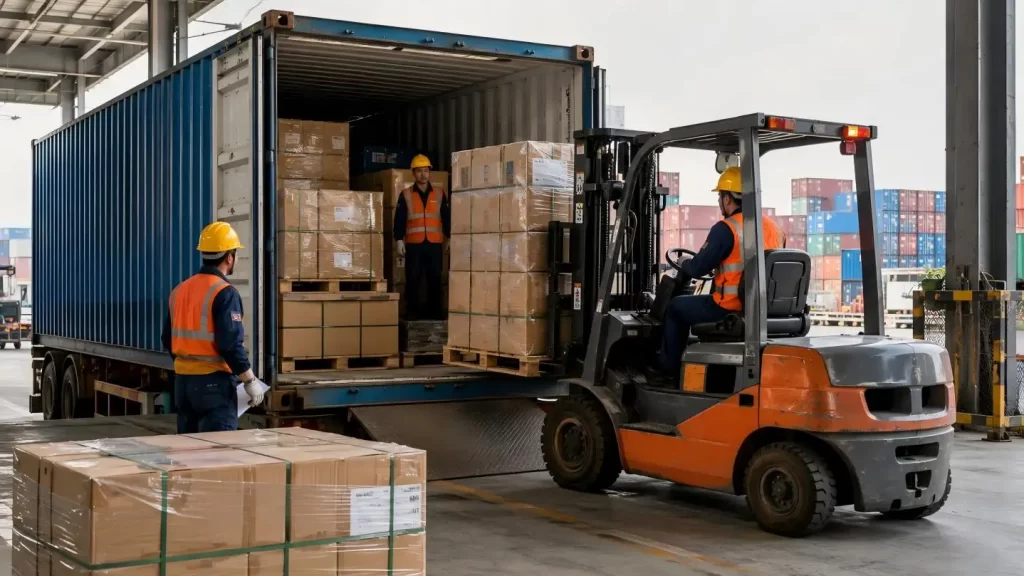
At Fexbuy, we assess each FBA shipment as a complete supply chain: supplier pickup, cargo consolidation, export declaration, ocean transport, customs clearance, destination handling, Amazon delivery and inventory receiving. A shipment is only complete when the stock becomes available for sale—not when the vessel reaches port.
When Does LCL shipping from China make sense?
LCL, or Less than Container Load, shipments consolidate cargo from multiple shippers in a single container. It is an option when the cargo won’t fill a container and an economical full container booking can’t be made due to time constraints, making air freight the only option.
LCL shipping from China makes sense when:
•Inventory can be replenished according to a scheduled plan
•Multiple Chinese suppliers need to be consolidated
•Cartons can withstand multiple handing
•The seller wants to keep the inventory exposure limited
•The cargo is standard, non-hazardous and properly documented.
There is no defined break-even volume for Less than Container Load (LCL) shipments. After a certain volume of Calculated Container Loads (CBLs), which is typically in the double digits, importers should consider the full LCL and FCL options. Large LCL shipments can still be cost effective; however, consider destination CFS charges.
| Decision Factor | LCL | FCL | Air Freight |
| Shipment size | Small to medium | Larger volume | Small, urgent cargo |
| Handling frequency | Higher | Lower | Moderate |
| Transit predictability | Moderate | Generally higher | Highest |
| Best application | Planned replenishment | Bulk inventory | Launches and stockouts |
| Main risk | CFS fees and co-loading | Unused container space | High cost per kilogram |
LCL Shipping from China Process
Step 1. Confirm Product and Import Eligibility
It is important to confirm that the product is acceptable to Amazon FBA and that there are no barriers to the product’s admission to the target market, before confirming LCL Shipping from China.
Review:
•HS Code and product description;
•Import duty and tax treatment;
•Product certificates or test reports;
•Battery, liquid, magnetic or dangerous goods;
•FBA category and inventory restrictions;
•Importer of Record and local tax obligations;
Amazon will not be the Importer of Record. The responsible party will be identified and the shipment will leave for Amazon fulfillment centers.
Step 2. Create the Amazon Shipment Plan
The seller will initiate the plan to ship the goods to Amazon by going to Send to Amazon in Seller Central. The plan will be for the specific SKUs and quantities and will be fulfilled to the destination fulfillment center.
Amazon will give the seller various options for inventory placement. The seller will need to check the following before printing labels:
•Ship from address;
•Unit and carton quantities;
•Individual or case-packed items;
•Destination warehouse;
•FNSKU and box labels.
If Amazon changes the destination or the seller changes the carton quantities, the warehouse will need new labels.
Step 3. Prepare and Label the Inventory
Preparing inventory for FBA and preparing international freight shipping have some similar steps, but are for the most part, different processes.
It is required that each individual unit have a unique, scannable barcode, so that Amazon can scan and track the inventory. Cartons must be labeled, and shipments palletized shipments may require additional pallet labels. Any barcodes on the packages that may hinder scanning are not allowed and must be covered.
For international transport, packaging should account for stacking pressure, moisture and repeated CFS handling. Depending on the product, protection may include:
•Strong export cartons;
•Inner dividers or molded inserts;
•Edge and corner protection;
•Moisture-resistant liners;
•Palletization or stretch wrapping;
•”Sold as Set” or suffocation warning labels.
Amazon’s FBA preparation guidance explains that incorrectly prepared inventory may be refused, returned or repackaged at the seller’s expense.
Step 4. Collect and Consolidate Cargo in China
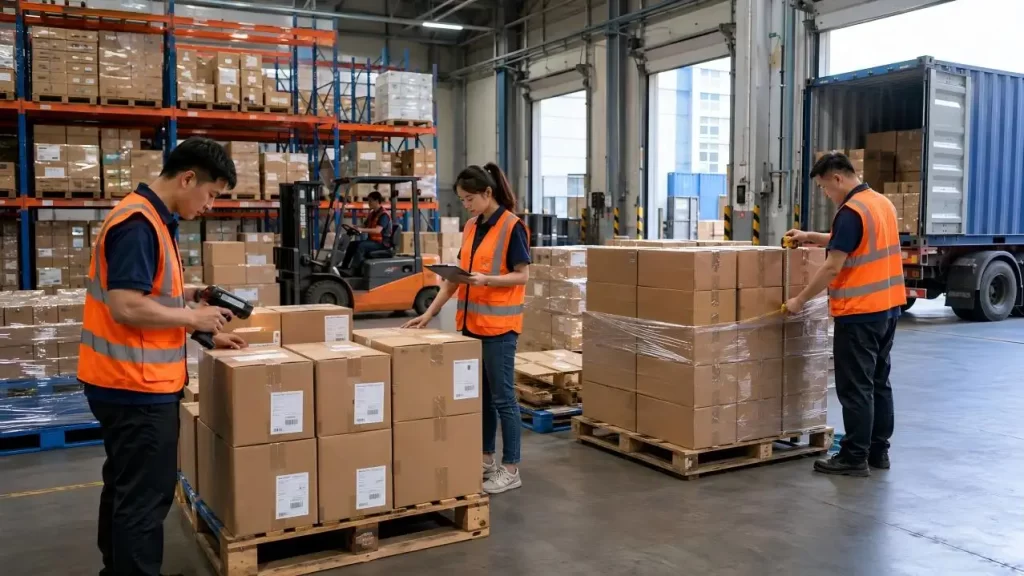
Fexbuy is able to collect cargo from one or more suppliers and consolidate cartons in a China warehouse. The physical cargo must be verified against the shipment plan prior to being exported.
The consolidation check should cover:
•SKU and carton count;
•Gross and net weight;
•Carton dimensions and total CBM;
•FNSKU, box labels and shipping marks;
•Packaging damage or deformation;
•Commercial invoice and packing-list consistency.
Consolidating multiple suppliers can reduce documentation and pick up costs, but one supplier missing a deadline can cause a delayed booking, so an agreed upon cargo-ready deadline would be useful in these situations.
Step 5. Complete Export and CFS Handling
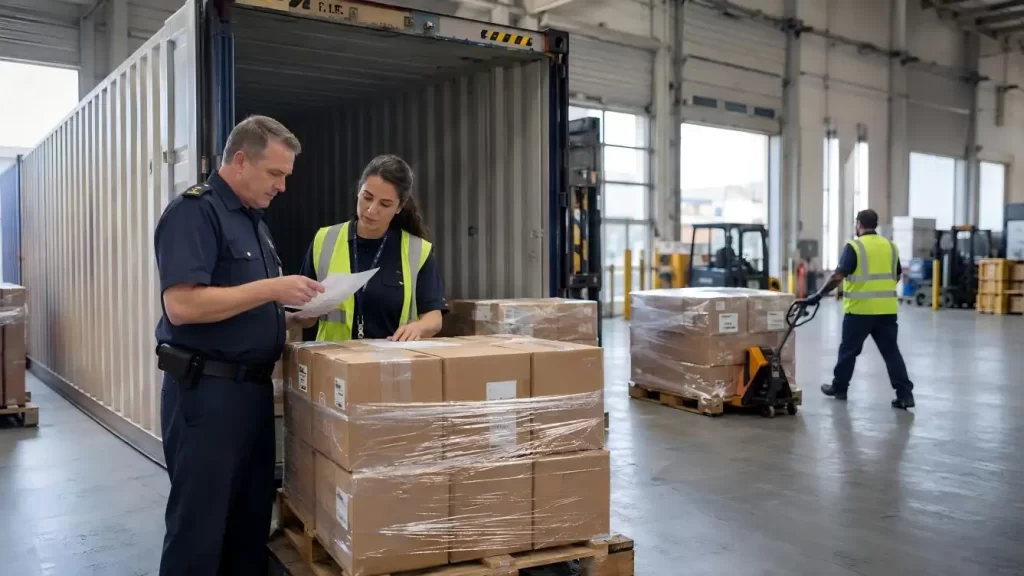
The cartons are delivered to a Container Freight Station, cleared for export and loaded with cargo from other shippers.
LCL is normally charged by weight or by dimension. The carrier will bill using the greater of the two, volume or chargeable weight. With verified dimensions from the CFS, the billable volume may be different from the volume estimated at the factory.
Step 6. Manage Import Clearance and Deconsolidation
Containers are moved to a CFS to be broken down into multiple shipments. To clear Customs, the following will be required:
•Commercial Invoice
•Packing List
•Bill of Lading
•HS Classification
•Importer
•Product specific licenses/certificates
If the documentation is insufficient, the cargo will be examined, storage charges will be applied, and transport and delivery will be delayed.
Step 7. Deliver to the Amazon Fulfillment Center
Customs will deliver the cargo to the Amazon fulfillment center of your choice. The final-mile carrier will need the fulfillment center address, as well as the number of cartons and pallets. These must be the same number as shown in the plan on your Seller Central.
Proof of delivery does not mean the inventory is immediately available. Sellers should continue monitoring the shipment through delivered, checked-in, receiving and closed status.
Understanding the Total Landed Cost
The base ocean rate is only one part of LCL Shipping from China.
| Cost Stage | Typical Charges |
| Origin | Pickup, consolidation, inspection and export declaration |
| China CFS | Warehouse handling, documentation and loading |
| Ocean freight | Base rate and applicable surcharges |
| Destination CFS | Deconsolidation, terminal and release fees |
| Customs | Brokerage, duties, taxes and inspections |
| Final mile | Trucking, pallet handling, appointment and waiting |
| Amazon | Placement, receiving and storage-related charges |
Amazon fees must be separated from freight forwarding fees. When giving a DDP quote, sellers must verify the declared value, duty treatment, and arrangement of the Importer of Record, in addition to destination fees.
Transit Time Should Be Measured Door to Stock
When organizing LCL Shipping from China, you can expect the following sequence:
Cargo Ready Date → Consolidation → CFS Cut-Off → Vessel Departure → Arrival → Customs Release → Deconsolidation → Amazon Appointment → Inventory Receiving
There are a number of disruptions that can occur. These include suppliers who do not meet the cargo ready date, rolled sailings, customs inspections, use of incorrect FBA labels, warehouse reassignments, and a missed delivery appointment window. It is suggested that sellers pad their schedules to account for the surprise disruptions that will happen when bringing promotional and seasonal inventory.
Direct-to-FBA or Delivery Through a 3PL?
| Route | Best For | Main Limitation |
| Direct to FBA | Verified, retail-ready inventory | Limited opportunity to correct errors |
| Via a 3PL | Mixed SKUs, relabeling or inventory splitting | Additional handling and storage |
| Via AWD | Bulk stock with gradual replenishment | Program eligibility and added planning |
Direct delivery reduces transfers, but a 3PL provides a valuable control point when cargo may require inspection, relabeling or shipment-plan changes.
Build the Shipment Around Amazon Receiving
Reliable LCL Shipping from China requires coordination between the supplier, consolidation warehouse, customs broker, final-mile carrier and Amazon shipment plan. Cost, volume, SKU complexity, urgency, product risk and importer responsibility should all be reviewed before booking.
FBA sellers can contact Fexbuy’s FBA Shipping Service to evaluate a practical shipping plan based on cargo details, destination market, compliance requirements and replenishment schedule.
FAQs
Q1. What LCL services does Fexbuy provide for Amazon FBA sellers?
Fexbuy can coordinate supplier pickup, cargo consolidation, export handling, ocean freight, customs-clearance support and final delivery to Amazon fulfillment centers.
Q2. Can Fexbuy consolidate products from multiple Chinese suppliers?
Yes. Fexbuy can arrange collection from multiple suppliers and consolidate the cartons at a China warehouse before booking the LCL shipment.
Q3. Can Fexbuy deliver LCL cargo directly to Amazon warehouses?
Direct-to-FBA delivery may be arranged when the inventory meets Amazon’s packaging, labeling, customs and delivery requirements. Availability depends on the destination and shipment details.
Q4. Does Fexbuy check FNSKU and Amazon box labels?
Fexbuy can coordinate label and carton checks when included in the agreed service scope. Sellers must provide the latest labels generated through their Seller Central shipment plan.
Q5. What information does Fexbuy need to prepare an LCL quotation?
Sellers should provide the pickup address, destination warehouse, product description, carton count, dimensions, weight, cargo-ready date, HS code and preferred Incoterm.


