


Lithium Battery Air Transport: Rules, Risks, and Best Practices for Safe, Compliant Shipping
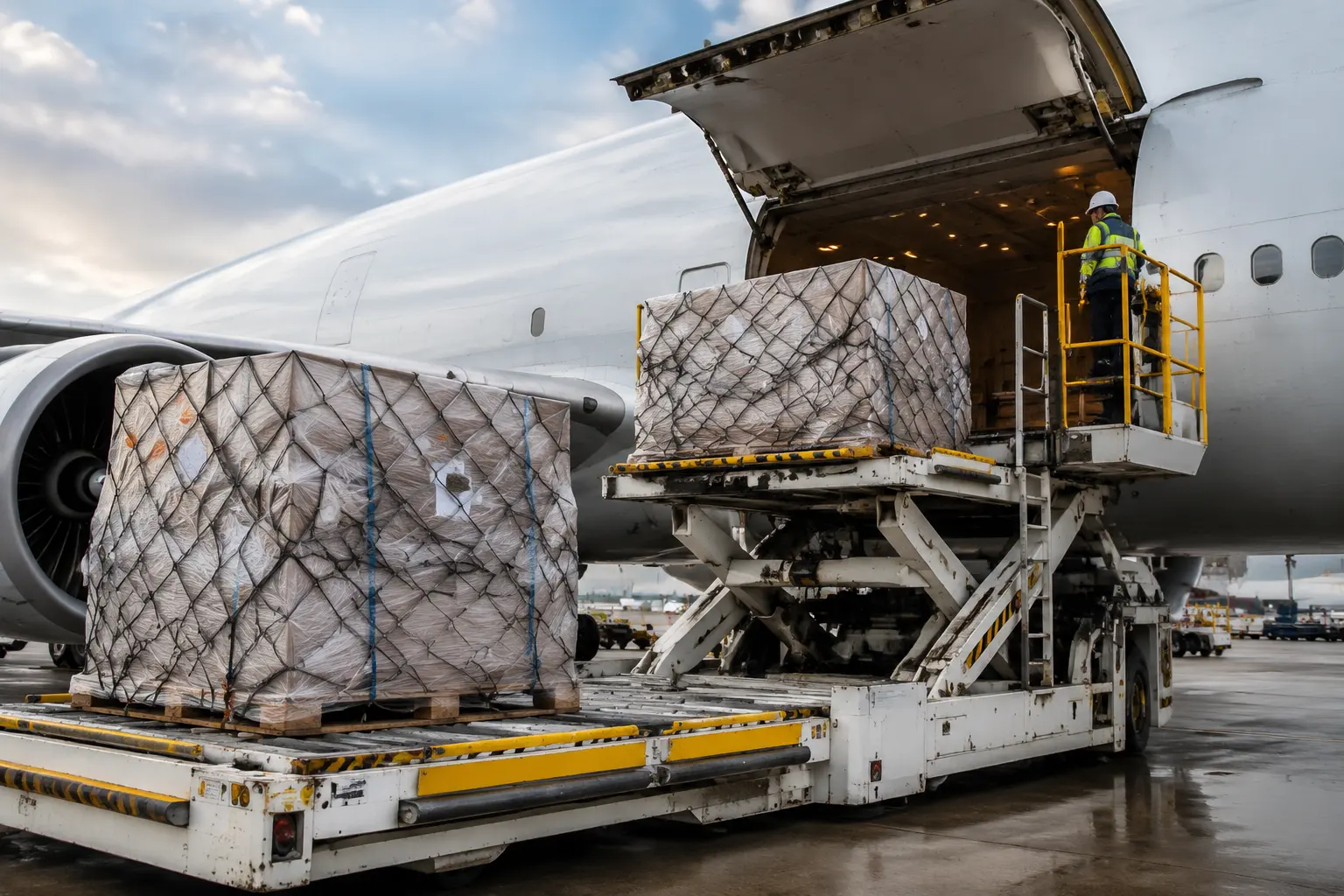
Lithium batteries have become a logistics headache. They power everything from phones to electric vehicles to industrial tools, and when they need to move fast, air freight is often the only option. But airlines treat them as hazardous cargo—because they are. Overheated batteries can catch fire, and a single undeclared shipment can ground a plane.
For shippers, that creates a narrow compliance window. Get the classification wrong, skip a packaging step, or misstate the state of charge, and your shipment gets rejected at the gate. Get it right, and you move urgent inventory in days instead of weeks.
Why this matters now
Three things are pushing more batteries onto cargo planes:
Electric vehicles and components are scaling fast. Consumer electronics remain perpetually urgent. Industrial and renewable-energy batteries are growing quietly but steadily. Even when batteries aren’t the end product, they move as spare parts, replacements, or components inside devices.
The pressure on shippers is real. Factory downtime costs money. Product launches have fixed dates. Inventory that sits in a warehouse or ocean container can kill a quarter. Air freight solves that problem, but only if the shipment clears acceptance.
The compliance stack
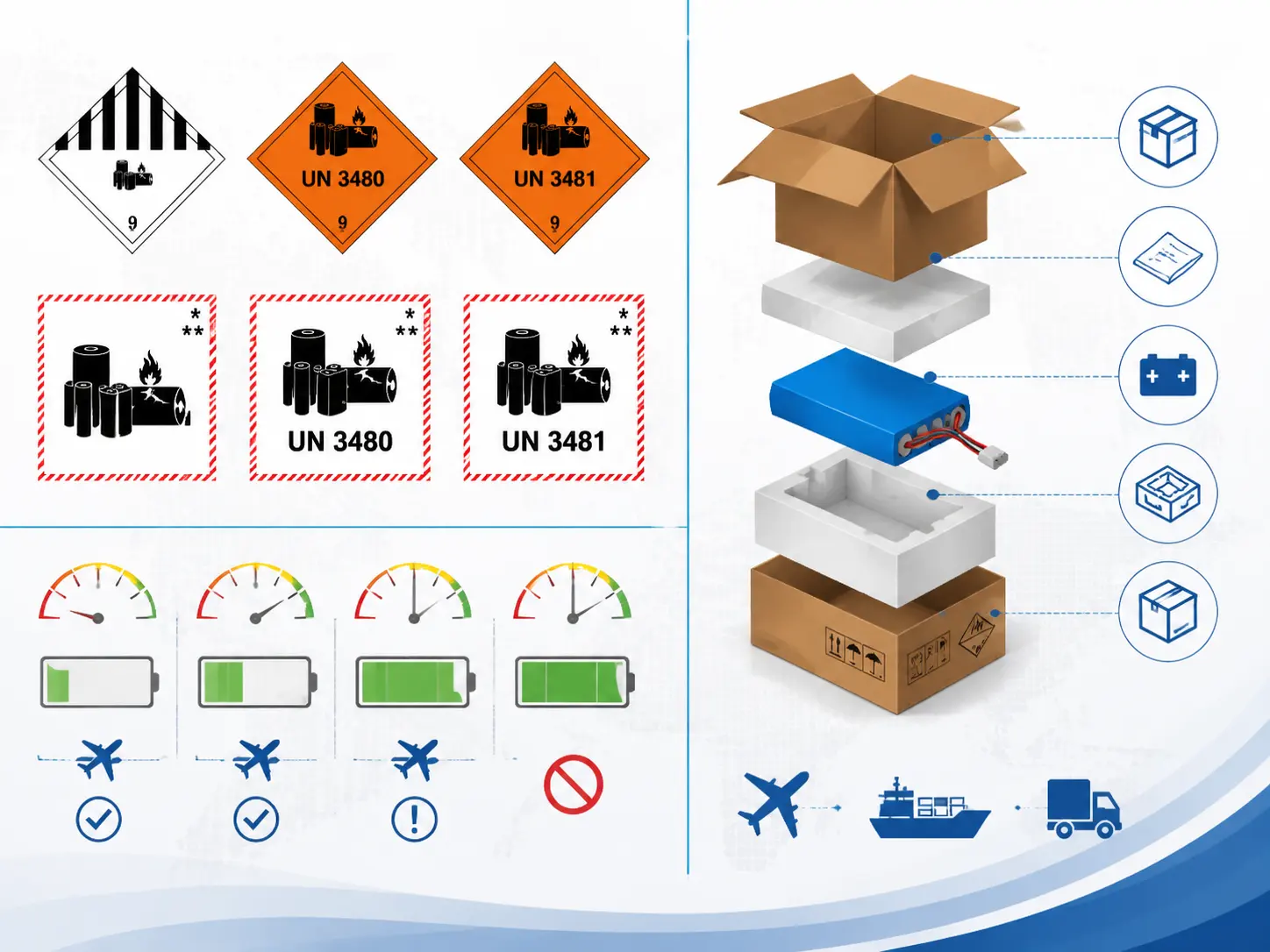
Lithium battery shipments by air fall into one of four UN categories, depending on chemistry and whether the battery travels alone or installed in equipment:
- UN 3480: Lithium-ion batteries shipped alone
- UN 3481: Lithium-ion batteries packed with or inside equipment
- UN 3090: Lithium-metal batteries shipped alone
- UN 3091: Lithium-metal batteries packed with or inside equipment
These distinctions matter because handling rules, packaging standards, and carrier acceptance criteria differ sharply. A standalone battery faces more scrutiny than one installed in a finished device.
State of charge: the gatekeeper
For standalone lithium-ion batteries on cargo planes, the standard limit is 30% charge. This is not arbitrary. Lower charge means lower fire intensity if something goes wrong. Many rejections happen because shippers either don’t know this rule or can’t prove the battery meets it. Airlines increasingly treat this as non-negotiable.
Packaging, protection, terminals
Batteries must be packed to survive handling without short-circuiting, tearing, or crushing. That usually means insulated terminals, inner protective layers, strong outer cartons, and clear labeling. For palletized shipments, individual package integrity still has to survive warehouse forklifts.
Documentation alignment
Many delays happen not because batteries are unsafe, but because paperwork doesn’t match. If your invoice says 10 cells but your packing list says 12, or your battery spec sheet gives a different watt-hour rating than your dangerous goods form, the shipment gets held pending clarification. Consistency is faster than correctness by itself.
What’s shifting in the market
Airlines are tightening pre-acceptance checks. They want battery chemistry, watt-hour rating, cell count, and configuration details before you book a slot. This reduces rejections and lets them screen risk earlier.
Small-parcel and e-commerce shipments are under more scrutiny. The volume of undeclared or mislabeled batteries moving through courier networks has risen, so carriers are more cautious across the board, even with legitimate shipments.
High-value sectors keep demanding faster turnaround. Electronics, medical devices, and industrial repair teams can’t wait for ocean freight when a factory is down or a product launch is delayed.
The better operators treat battery safety as a supply-chain problem, not a transport problem. That means packaging standards baked into sourcing, supplier education, hazard flags in the ordering process, and carrier coordination built in early.
Air vs. ocean: the trade-off
Air freight costs more but moves faster. Ocean freight is cheaper but adds weeks. The choice depends on what your shipment is trying to solve:
- Choose air for: urgent spare parts, product launches on a deadline, high-value batteries, emergency restocks, anything that blocks revenue or service
- Choose ocean for: planned bulk inventory, flexible timing, cost-sensitive shipments where speed doesn’t add value
For lithium batteries, the decision usually hinges on whether the shipment supports production or operations. If it does, air makes economic sense despite the higher freight cost.
Common rejection reasons (and how to avoid them)
Wrong classification: The shipment lands on the form as “batteries” when it should be UN 3480 or UN 3481 specifically. Double-check against your actual product before booking.
Documentation gaps: Invoice, packing list, spec sheet, and dangerous goods form don’t align. Spend 30 minutes confirming consistency before the truck arrives.
Weak packaging: Terminals exposed, carton is thin, boxes are overstuffed and hiding labels, pallet stacking crushes lower boxes. Test packaging once, then repeat it every time.
Battery damage or deformation: Swelling, leakage, dents, or recalls go straight to rejection. Inspect before handover. Recalled or defective batteries need special handling and may not move via standard air cargo at all.
No pre-confirmation with the carrier: Not every airline accepts every battery shipment. Some restrict by route, aircraft type, or battery config. Confirming acceptance before booking saves time and money.
A working process
Classify accurately. Confirm chemistry, watt-hour rating, and whether the battery travels alone or installed. Assign the correct UN number.
Match the regulatory path. Don’t assume a prior shipment’s rules apply to this one. A small product change can alter the compliance path.
Package to spec. Use tested packaging. Protect terminals. Prevent movement inside the box. Keep labels visible.
Check state of charge and condition. For standalone lithium-ion batteries, confirm the charge level. Look for swelling, leakage, or deformation.
Align all documents. Before booking, verify that invoice, packing list, spec sheet, and dangerous goods forms all say the same thing.
Get carrier buy-in early. Call ahead. A good freight partner validates the shipment before it hits the airport, not after.
Build a repeatable process. If you ship batteries regularly, write down the steps, checklists, packaging standard, approval workflow, and carrier contacts. Repeatable systems beat ad hoc every time.
Who uses this service
Electronics manufacturers, e-commerce sellers managing urgent replacement stock, medical device companies, automotive suppliers, industrial equipment brands, repair and spare-parts teams, and contract manufacturers moving prototypes all depend on fast, compliant battery air transport.
For these shippers, speed isn’t a convenience. It’s operational continuity.
What to look for in a logistics partner
Not all freight forwarders handle lithium batteries the same way. Look for:
- Hands-on dangerous goods experience, not just a certification
- Current knowledge of airline acceptance rules by route and carrier
- Documentation review before booking, not after rejection
- Packaging guidance matched to your specific product
- Multiple carrier options to work around restrictions
- Proactive exception management when things go sideways
A capable partner reduces failed bookings, improves on-time performance, and eliminates the hidden cost of rework.
The bottom line
Lithium battery air transport is fast and reliable when three things are done right: classification, packaging, and documentation. When they’re not, you face delays that hit the bottom line.
The market is growing. Airline safety standards are rising. Acceptance scrutiny is tightening. That makes discipline more valuable than ever.
If you move lithium batteries by air regularly, build compliance into your sourcing and fulfillment process. That protects cargo, avoids rejections, and keeps your supply chain moving in a market where speed and reliability increasingly define the difference between competitiveness and downtime.
Share:


